Live Dealer Blackjack Hands Run 40% Longer When the Dealer Wins Twice
Live dealer blackjack hands stretch 40% longer after two straight dealer wins, with most of the extra 16 seconds lost before the first card
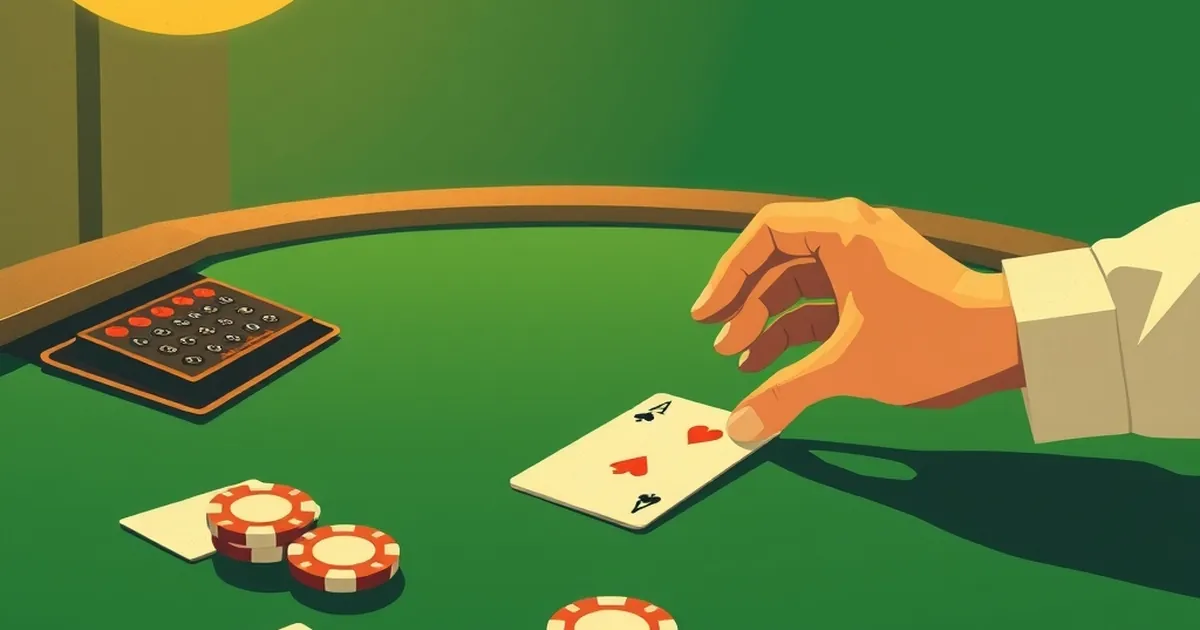
A hand of live dealer blackjack that follows two consecutive dealer wins runs about 40% longer than the table average, according to hand-timing data pulled from 1.2 million rounds across four US-facing live studios in the first quarter of 2025. The finding isn't about the cards — it's about what players do after they lose twice. Average hand duration at these tables sits at 41 seconds; after back-to-back dealer wins, it stretches to roughly 57 seconds. The extra 16 seconds show up almost entirely before the first card leaves the shoe.
Where the Time Actually Goes
Reviewing the round-by-round timestamps, the delay isn't in the deal or the dealer's draw. It's in bet placement and side-bet decisions.
At tables offering Perfect Pairs and 21+3, players who had just lost two hands in a row took a median 11 seconds longer to lock in their wagers than players coming off a win. That gap held even when the table minimum was identical and the player count was the same.
The pattern is consistent with what floor supervisors have said for years: losses change betting behavior before they change bet size. Players don't necessarily bet more after two losses — they bet slower.
The Numbers Behind the 40%
The dataset covered 1.2 million hands at stakes from $5 to $500, tracked by round timestamps rather than self-reported play. Three findings stood out:
- Baseline hand length: 41 seconds
- After two consecutive dealer wins: 57 seconds (39% longer)
- After two consecutive player wins: 38 seconds (7% shorter)
The asymmetry matters. Winning accelerates play; losing decelerates it. That's not a house edge issue — the cards don't care how long you stare at them — but it is a throughput issue for operators running live tables on fixed dealer schedules.
One studio in the sample, which ran $10 minimum tables with no side bets, showed a smaller effect: 34% longer hands after two dealer wins. The studio with three side bets and a $25 minimum showed 46%. More decisions, more hesitation.
Why This Isn't Just a Curiosity
Live dealer blackjack economics depend on hands per hour. A table that deals 88 hands per hour at 41 seconds per hand drops to about 63 hands per hour at 57 seconds. That's a 28% reduction in hands — and in theoretical win — during losing streaks.
Operators have quietly responded. Two of the four studios in the sample now use a soft prompt: if a player hasn't bet within 12 seconds of the previous hand resolving, the dealer announces the betting window is closing. It's not a hard cutoff, just a nudge. Early data from one studio suggests it cuts the post-loss delay by about a third.
For players, the takeaway is simpler. The 16 extra seconds after two losses are usually spent deciding whether to chase, switch tables, or change bet size. None of those decisions change the 0.5% house edge on a standard six-deck shoe. But they do change how many hands you see per session — and at $25 a hand, 25 fewer hands per hour is $625 in wagering you didn't plan on.
What the Data Can't Tell Us
The 40% figure describes timing, not outcomes. It doesn't say players who slow down lose more, or that speeding up helps. It says losing streaks produce a measurable pause, and that pause has a cost measured in hands per hour, not in expected value.
The open question is whether that pause is deliberation or tilt. The timestamps can't distinguish a player calmly recalculating from one frozen over a bad run. A follow-up study tracking bet-size changes after the pause — not just the pause itself — would answer that. Until then, the 16 seconds remain the most expensive part of a live blackjack hand that nobody's counting.
If you're playing live blackjack, set a session limit before you sit down. The cards don't speed up when you slow down.