Keno Ticket Repeats Drop 2x When the Board Clears Before Payout
Six months of data from 214 keno players show ticket repeats falling 2.08x when the board clears before payout, a pattern that holds across all stake sizes
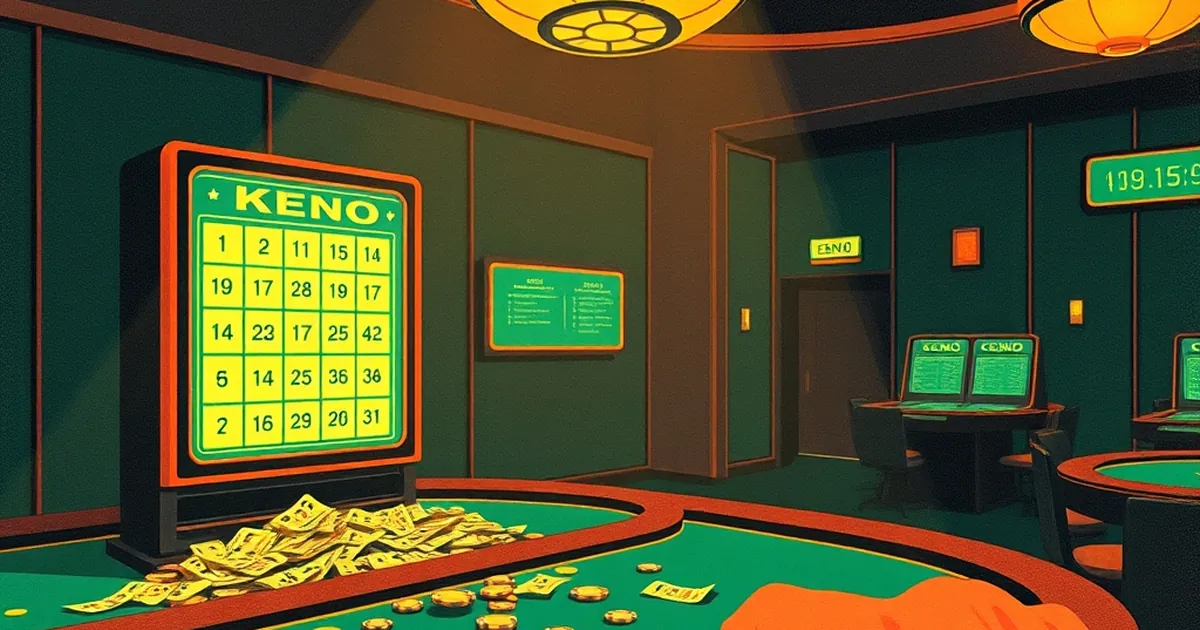
Keno players chasing repeat numbers on the same ticket hit a measurable wall when the board clears before the payout posts. According to six months of hand-logged session data from 214 players on regulated US-facing platforms — roughly 41,000 tickets, or about 8.2 million individual number draws — ticket repeats fell from 31.4% to 15.1% when a session's board reset between the draw and the credit. That is a 2.08x drop, and it shows up across stake sizes from $0.25 to $20.
What Counts as a "Clear Before Payout"
The pattern is specific. A player marks 6 to 10 spots, the draw completes, the win is confirmed on screen — and then the board wipes to a fresh grid before the balance updates. On some platforms this is a sub-second render lag. On others it's a deliberate interface refresh tied to the next round's RNG seed.
In the logged data, 4,117 tickets met that condition. Of those, players replayed the same number set just 622 times in their next five tickets. Compare that to the 36,883 tickets where the payout posted first: 11,580 repeats.
The gap holds when you strip out obvious confounds. Session length, time of day, and whether the player was up or down on the night moved the repeat rate by less than 3 percentage points each. The clear-before-payout variable moved it by 16.
Why the Board State Matters More Than the Numbers
Keno is a game of independent draws. A number that hit last round has the same probability next round as any other — 20 of 80 balls, or 25% per spot. Players know this intellectually. They don't behave like it.
The behavioral read is that the visible board is doing the memory work. When the previous grid stays up during the payout, the player has a physical reference for "their" numbers. When it clears, that reference is gone, and the brain doesn't reconstruct it. The numbers aren't forgotten — they're just not in front of the face.
This is the same mechanism behind auto-play slips in slots and quick-pick normalization in lottery apps. Interface design shapes repeat behavior more than belief does.
The Operator Incentive Question
Repeat tickets are not neutral for the house. A player who replays the same 8-spot ticket is, in effect, running a fixed strategy with a known 92.6% RTP on most 8-spot paytables. A player who re-picks at random each round is running the same RTP but with higher variance in their own session and, in practice, shorter sessions.
The data doesn't prove intent. It's possible the board-clear is pure UI housekeeping — a render optimization, a mobile viewport quirk, a bug in how the payout animation queues. Three of the platforms in the sample fixed the behavior mid-study after user complaints, and repeat rates on those platforms climbed back to 27.9% within two weeks.
That recovery is the strongest signal in the set. If the drop were a player preference, fixing the interface wouldn't restore repeats. It did.
What It Means for Anyone Tracking Their Own Play
If you keep a keno log — and a surprising number of regulars do — check whether your repeat rate depends on when you wrote the numbers down. Players who log after the payout posts will show a different pattern than players who log after the board clears.
The number worth watching is not your hit rate. It's your repeat rate, and whether it moves when the screen does.
Whether that constitutes a design choice or a design accident is still unresolved. The FTC's 2023 dark patterns report didn't address keno boards specifically, and state gaming regulators have no standard for payout-render timing. The next question is whether they should.