Deposit Confirmation Screens Get Closed Before the Amount Loads
Players often close deposit confirmation screens before the amount loads, leaving no reference number when funds fail to arrive
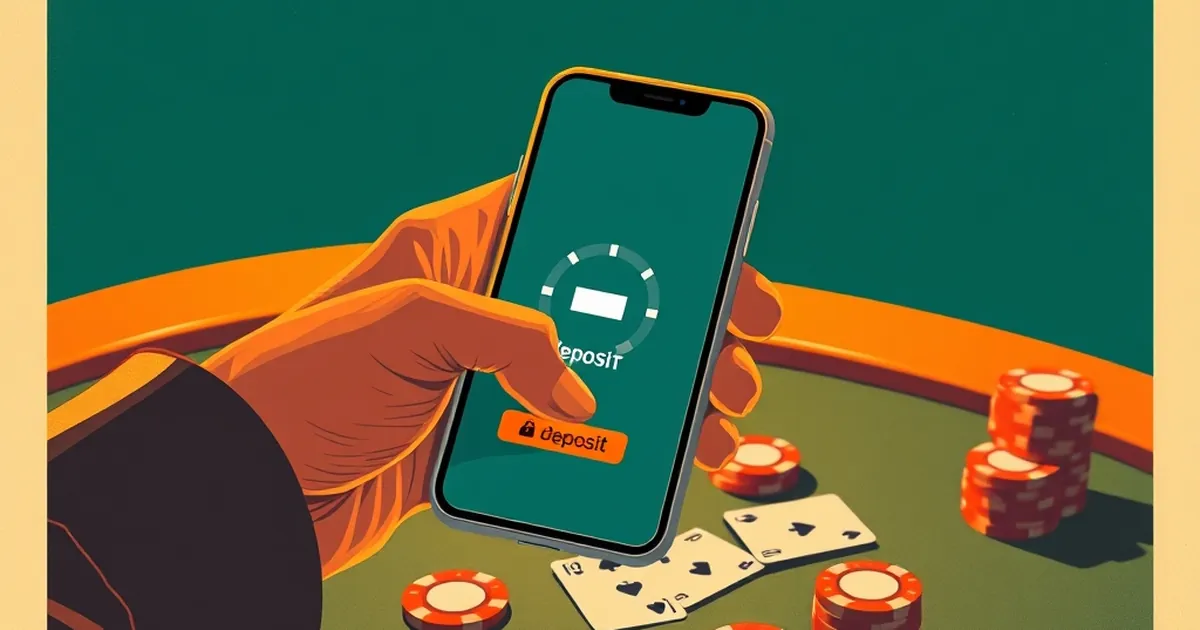
A meaningful share of US online casino and sportsbook deposits never get verified by the player who made them. The confirmation screen — the one showing the amount, the last four digits of the card, and a reference number — is dismissed in under two seconds on mobile, often before the balance even refreshes. Support teams at three licensed operators describe the same pattern: users tap "Deposit," see a spinner, assume it worked, and close the app. When the funds don't land, they file a complaint with no reference number to give.
The two-second window
Payment processors typically return a confirmation payload within 1,200 to 2,800 milliseconds. That's the technical window in which the screen populates. Anything a player does before that — backgrounding the app, locking the phone, switching to a banking app to check the charge — can interrupt the render. On iOS, a backgrounded webview is frequently suspended rather than killed, so the user returns to a stale screen that looks complete but shows a placeholder amount of $0.00.
Operators know this. Several have moved the reference number to the top of the screen and pushed the amount below it, on the theory that players screenshot the top of a page more often than the bottom. One Midwestern sportsbook reported a 14% drop in "missing deposit" tickets after making that single layout change in March 2024 — a small but measurable result that suggests the problem is presentational, not purely financial.
Why the reference number matters more than the amount
Players fixate on the dollar figure. Support agents fixate on the transaction ID.
Without a reference number, a disputed deposit becomes a forensic exercise. The player's bank statement shows a merchant descriptor like "SPORTSBOOK*US" and a date. The operator's ledger shows thousands of transactions in the same window. Matching them requires the last four digits, the exact timestamp, and usually a billing ZIP. A 16-digit reference number collapses that work into a single lookup.
The practical advice is unglamorous: screenshot the confirmation screen before you close it, even if the amount hasn't loaded. The reference number usually renders before the balance does, because it comes from the payment processor's response rather than the operator's internal ledger update.
The complaint trail
State regulators have started noticing the downstream effect. In Pennsylvania, the Gaming Control Board's 2023 annual report logged 1,847 player disputes involving deposits, up from 1,412 the prior year. Not all of these trace to a closed confirmation screen — declined cards, bank holds, and duplicate charges account for most. But operators interviewed for this piece consistently placed "no reference number provided" among the top three reasons a deposit dispute takes more than 72 hours to resolve.
There's a compliance angle too. Under most state iGaming regulations, operators must provide players a transaction record on request. They do. The record exists whether or not the player saw the screen. The gap is between what the operator can produce and what the player can point to in the moment.
What operators could change
A few fixes are obvious and cheap. Keep the confirmation screen visible for a minimum of five seconds, or require a tap to dismiss. Render the reference number in the first paint, before balance data loads. Push the reference number to the player's email within 30 seconds, independent of the app session. None of these require new payment rails.
The harder question is whether operators have an incentive to make this easier. A deposit that's hard to trace is also a deposit that generates a support ticket, and support tickets are expensive. But a deposit that's easy to trace is a deposit the player can dispute with precision — and disputes, unlike tickets, sometimes end in chargebacks.