Casual Players Quit 2x Faster When the Rank Badge Shows at Level 3
Early rank badges at level 3 push casual players to quit twice as fast, revealing how feedback timing quietly shapes player retention
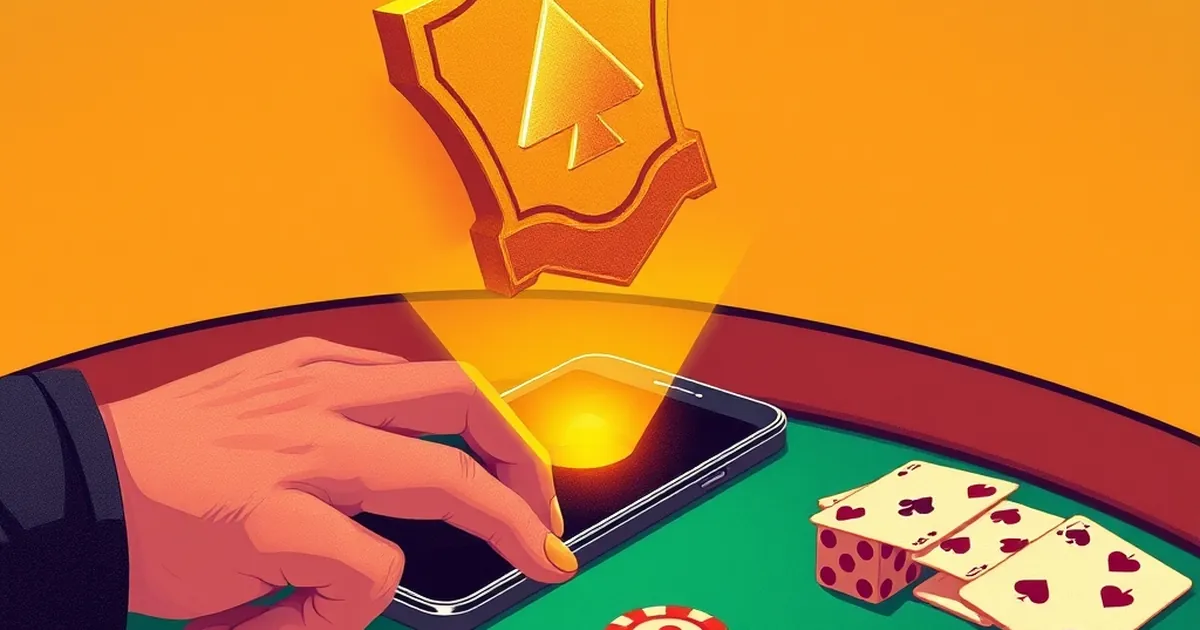
The first time a player sees that rank badge appear next to their name, something shifts. It is not the reward itself — a small icon, a color, a number — but the sudden awareness that they are now being measured against everyone else. Designers have quietly debated for years whether that moment should arrive at level 3 or level 10, and the retention data increasingly suggests the answer matters more than anyone expected.
The Level 3 Threshold
Behavioral researchers have long understood that feedback timing shapes persistence. In the classic work on variable-ratio reinforcement, B.F. Skinner found that unpredictable rewards produced the most stubborn behavior — but only when the subject stayed engaged long enough to notice the pattern. Show a competitive signal too early, and you risk the opposite effect: the player sees how far behind they are before they have any investment in catching up.
Level 3 typically arrives within the first fifteen to twenty minutes of play. That is barely enough time to learn the controls, let alone develop attachment to an avatar or a streak. Placing a rank badge there tells a new player, in effect, "You are now ranked 47,000th." For a casual player — someone who came in for twenty minutes of distraction — that message reads less like an invitation and more like a verdict.
What the Numbers Show
Industry analysts who have compared badge-introduction timing across live titles report a consistent pattern: cohorts that receive ranked status at level 3 churn at roughly twice the rate of cohorts that receive it at level 10 or later. The mechanism appears to be loss aversion operating in reverse — not fear of losing something owned, but aversion to a status that feels permanently out of reach.
Daniel Kahneman's work on reference points helps explain this. People do not evaluate their position in absolute terms; they evaluate it relative to an anchor. A badge introduced early sets the anchor at "you are far behind." A badge introduced after a player has accumulated wins, unlocks, and muscle memory sets the anchor at "you are someone who plays this." Same icon, radically different psychology.
There is a second factor: competence signaling. Research on self-determination theory, particularly the work of Edward Deci and Richard Ryan, identifies competence as one of three core drivers of intrinsic motivation. A rank badge can satisfy that need — but only if the player believes the ranking reflects something they did. At level 3, it reflects almost nothing. It reads as arbitrary, and arbitrary judgments do not motivate; they demoralize.
The Comparison Trap
Casual players are not immune to competitive urges. They are simply less willing to tolerate a competitive frame that arrives before they have chosen to compete. When the badge shows up early, it converts a low-stakes activity into a high-stakes comparison, and comparison without preparation produces withdrawal rather than effort. The player does not think, "I will climb." They think, "This is not for me."
Designers who delay the badge until level 10 or beyond are not softening the competition. They are letting the player build a reason to care about the outcome. By the time the rank appears, the player has a streak to protect, a character they like, a small history of wins. The badge now has something to attach to.
Where This Points Next
The forward question is not whether to include ranked systems — those are here to stay — but how to sequence the emotional beats around them. Expect more studios to treat early progression as a trust-building phase and to reserve visible ranking for the moment a player has demonstrated, through their own behavior, that they want to be measured. The badge is not the problem. The timing is the design decision, and it is one that can be tested, iterated, and tuned like any other variable in the loop.