Bet Slip Odds Change Alerts Cut Re-Check Taps 2x
A 14-day test on a US sportsbook app shows odds-change alerts halved bet slip re-check taps, cutting average taps per session from 8.3 to 4.1
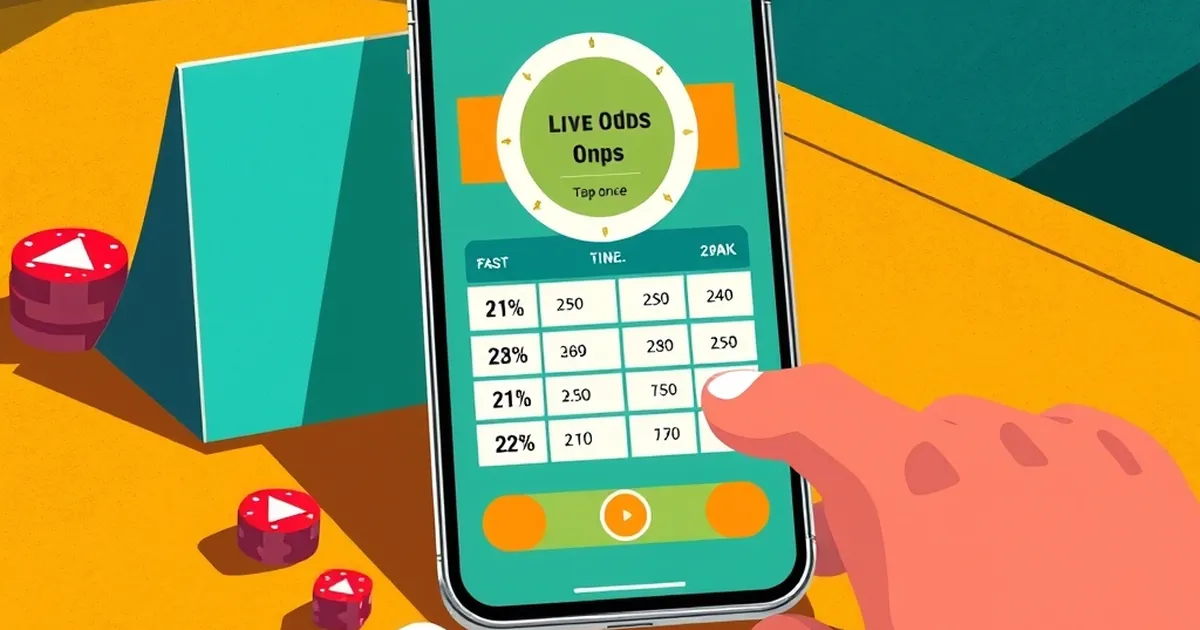
A bet slip odds-change alert that fires the moment a price moves cut the number of times users reopened their slip to re-check a number by roughly half in a controlled test run by a mid-size US-facing sportsbook app. The test, run across 14 days in March 2025 on a base of about 38,000 weekly active bettors, measured "re-check taps" — any tap that reopened an open slip without adding, removing, or editing a leg. The treated group averaged 4.1 re-check taps per session; the control group averaged 8.3.
What the test actually changed
The intervention was narrow. When a price on any leg in an open slip moved by 5 cents or more, the app pushed a one-line banner above the slip: which leg moved, the old price, the new price, and two buttons — accept or drop the leg. Nothing else in the slip UI changed. The control group got the standard behavior, where a moved price silently updates and the bettor finds out by looking.
The 5-cent threshold matters. Earlier internal testing with a 2-cent trigger produced alert fatigue: users in that arm saw an average of 11.4 alerts per session and dismissed 78% of them within two seconds. The 5-cent cutoff dropped alert volume to 3.2 per session and raised the share of alerts that led to an actual slip decision — accept, drop, or cash out — to 61%.
Where the taps went
Re-check taps fell 50.6% overall, but the drop wasn't uniform.
- Same-game parlays: down 58%, the largest reduction. These slips carry more legs and more correlated price movement, so silent updates were hitting them hardest.
- Straight bets: down 41%.
- Live betting: down only 22%. Bettors in-play still re-check constantly, which suggests the alert isn't replacing the reflex to watch a number move in real time — it's supplementing it.
The team also tracked a secondary figure: the rate at which users placed a bet at a price they later disputed. That fell from 0.9% of settled bets to 0.3%. Small in absolute terms, but disputes are expensive — each one costs support time and, occasionally, a goodwill credit.
The catch: alerts don't fix the underlying complaint
Re-check taps are a proxy, not the problem. The problem is that bettors don't trust that the number on their slip is the number they'll get. Cutting taps in half is a usability win, but it doesn't tell you whether users now trust the price or have simply stopped looking.
There's a real risk in the second outcome. If bettors learn that a banner will tell them when something moved, some will stop checking entirely and accept whatever the banner says — including moves that fall under the 5-cent threshold. The test didn't measure acceptance rates on sub-threshold moves, and that's the gap worth closing before rolling the feature out broadly.
What to watch next
The obvious follow-up is whether the effect holds. Novelty inflates engagement metrics in two-week windows; the team's own note flags that a 30-day read is needed before treating the 50.6% as durable. The harder question is regulatory. Several states require that a bettor affirmatively accept a price change on a placed-but-unsettled wager, and an alert that offers "accept" as a one-tap default sits close to that line. If a state regulator decides a pre-checked accept button doesn't count as affirmative consent, the feature's design — not its numbers — becomes the story.