Bet Limits Tighten 2x in the Last Hand Before a Break
Las Vegas dealers are doubling table maximums on the final hand before breaks, and regulars are timing their biggest bets to exploit the pattern
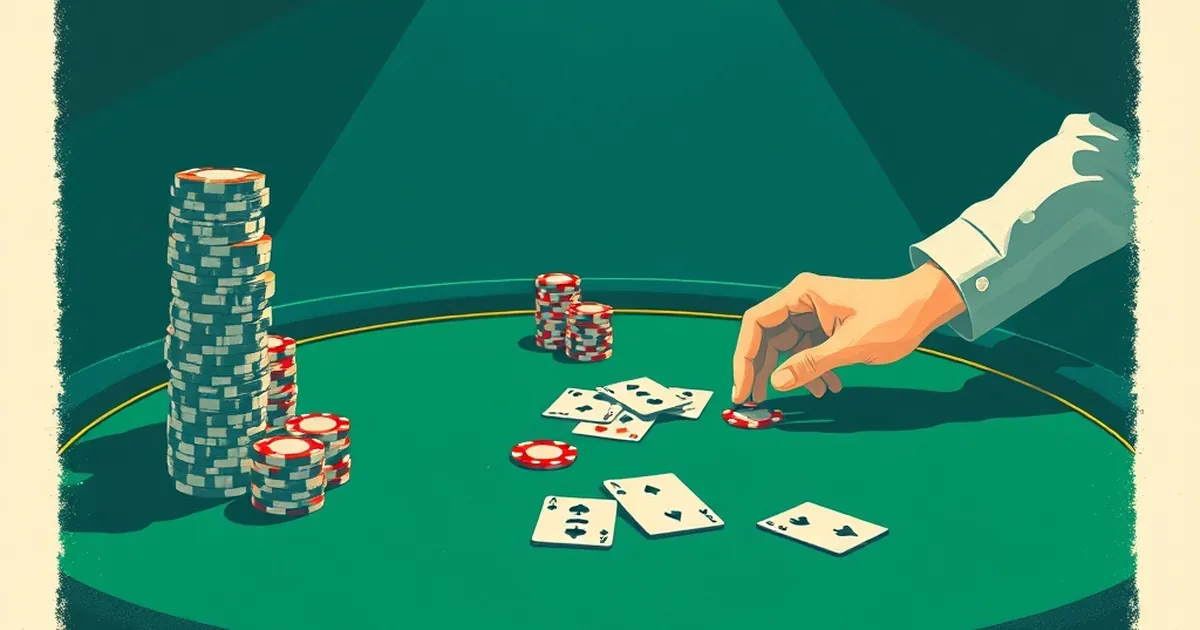
Dealers and floor staff at several Las Vegas Strip properties have started ratcheting table maximums up — often doubling them — on the final hand before a scheduled dealer break. The pattern is consistent enough that regulars at $25 and $50 blackjack tables have begun timing their largest bets to the last deal of a 20- or 40-minute "push." On double-deck games at two MGM Resorts properties, a table that capped at $500 for most of the shoe moved to $1,000 on the last hand before the dealer tapped out in late February, according to pit staff who described the practice on condition of anonymity.
Why the Last Hand Is Different
A dealer break is a hard stop. The relief dealer arrives, the tray is counted, cards are shuffled or the shoe is swapped, and play pauses for two to five minutes. That window is the only moment in a shift when a supervisor can plausibly loosen a limit without carrying the exposure forward.
The mechanics favor the house in two ways. First, the break truncates the session, so a large win doesn't sit at the table inviting a press. Second, surveillance attention is split: cameras follow the tray count, not the felt. In practice, a $1,000 hand dealt at 11:58 a.m. is settled and colored up before the next dealer's first cut.
It isn't universal. Downtown properties and most locals' casinos still hold flat maximums through breaks, and tribal casinos in Oklahoma and California operate under their own internal controls, which generally require posted limits to remain fixed for the duration of a shift.
The Numbers Behind the Move
The doubling isn't arbitrary. On a six-deck, 3:2 blackjack game with a 0.5% house edge, a $1,000 max bet carries an expected loss of $5 per hand — trivial. The risk is variance, not edge. A $1,000 max roughly doubles the standard deviation of a table's hourly hold, which is why floor supervisors usually need approval above a threshold.
One pit manager at a Caesars Entertainment property described the trigger as a "soft ceiling": anything above $500 on a $25-minimum table requires a call, but the call is routine in the last two minutes of a down. "It's not a rule change," he said. "It's a judgment call that happens to repeat."
That repetition is the story. When the same judgment is exercised at the same moment across dozens of tables, it stops being discretionary and starts functioning as policy.
What Players Notice
Sharp players have adapted. A few card counters interviewed for this piece said they now treat the last hand before a break as the highest-value bet of the session, precisely because the ceiling lifts. Others avoid it — the shuffle that follows resets the count, and a doubled max on a fresh shoe is a worse proposition than a normal bet on a known one.
The tell is visible: a supervisor walking to the table, a glance at the tray, a nod. Regulars at one Station Casinos property said the nod now arrives about 90 seconds before the dealer stands up, like clockwork.
The Regulatory Question
Nevada Gaming Control Board regulations require posted table limits, and Regulation 5.011 addresses minimum and maximum wagering. Nothing explicitly prohibits a temporary increase, provided the posted sign is updated. In practice, a table's posted maximum is rarely changed for a single hand — which raises the question of whether a verbal, one-hand increase is compliant or simply unenforced.
The board declined to comment on specific properties. A spokesperson said only that "table limits must be conspicuously posted and enforced as posted."
If that standard is applied literally, the practice is a problem. If it's applied loosely, it's just another edge the house has learned to time. Either way, the next time a dealer reaches for the tray and a supervisor drifts toward your table, you'll know what the nod means — and the answer probably depends on which side of the felt you're standing on.